Who needs to enter—and why?
We map routine and non-routine entry, whole-body access, visibility, escape and maintenance tasks before positioning gates or devices.

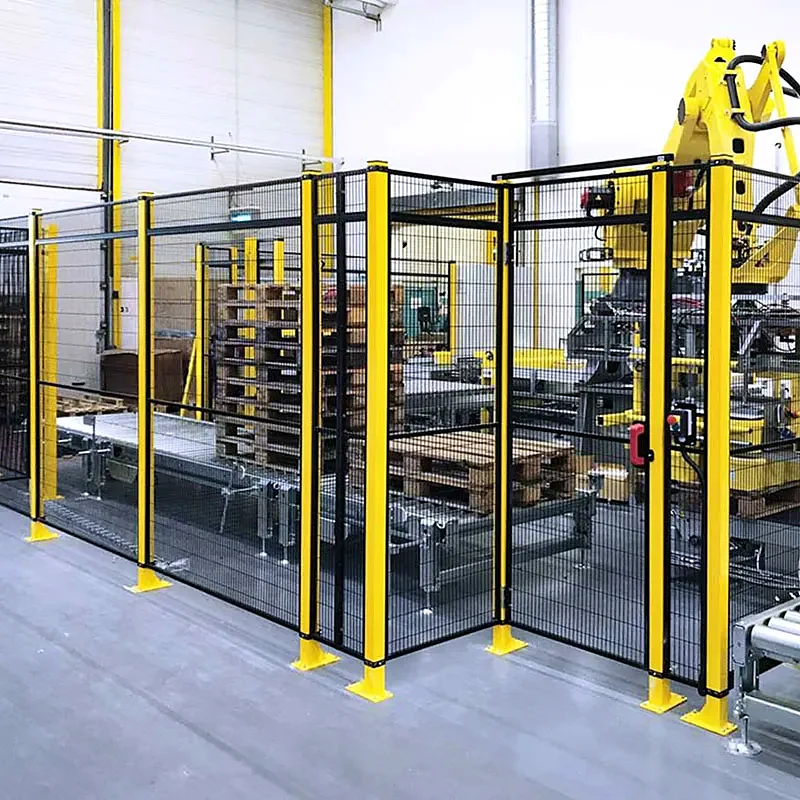
Robot-cell fencing, monitored access, interlocks, safety scanners and controlled restart systems designed around the hazard, the task and the real production environment.
Robot cell guarding separates people from hazardous robot and process movement while providing controlled routes for loading, setting, recovery and maintenance.
A robot-cell project is more than a fence. We develop the physical guarding, operator access, protective devices and safety-control behaviour as one joined-up solution.
Read the robot cell safety guide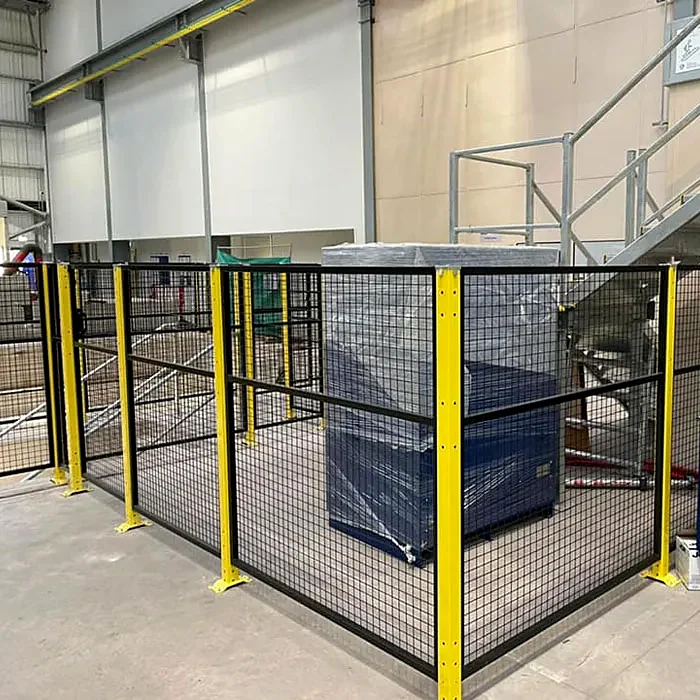
Mesh, solid and screened perimeter systems with task-led openings, heights and safe distances.
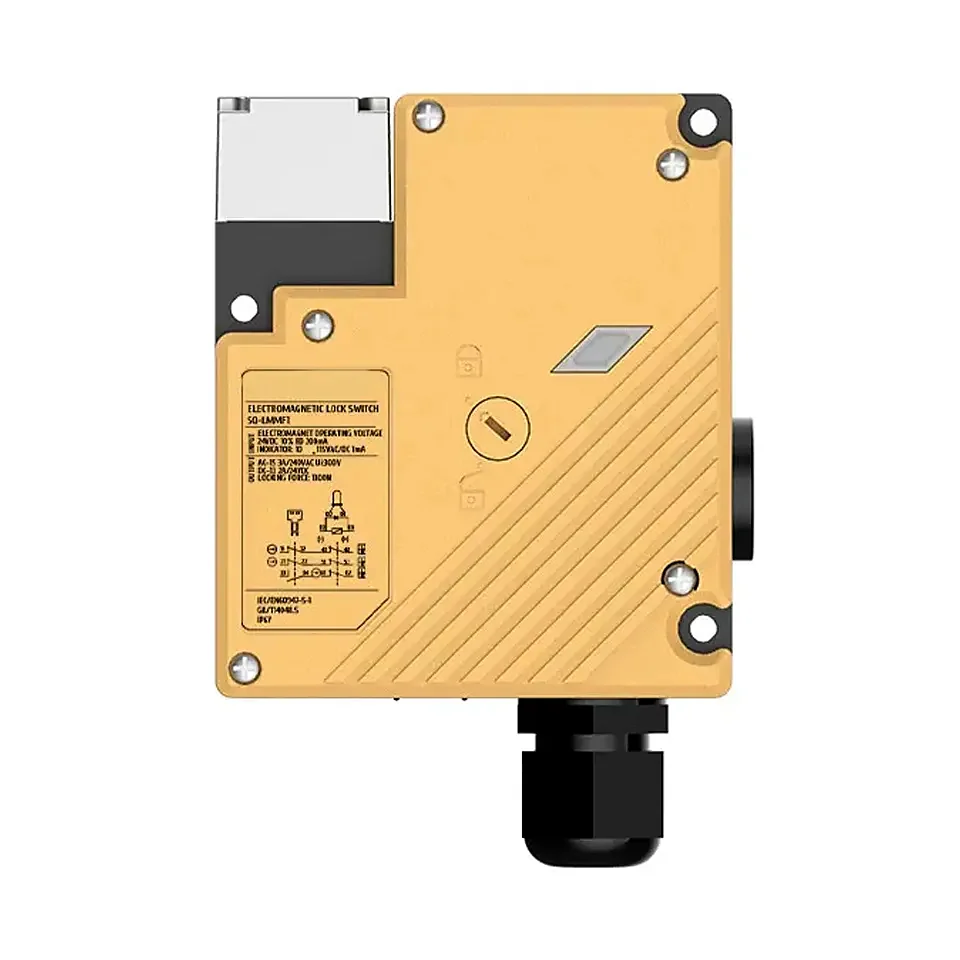
Hinged or sliding gates, coded interlocks, guard locking, escape release and request-to-enter logic.
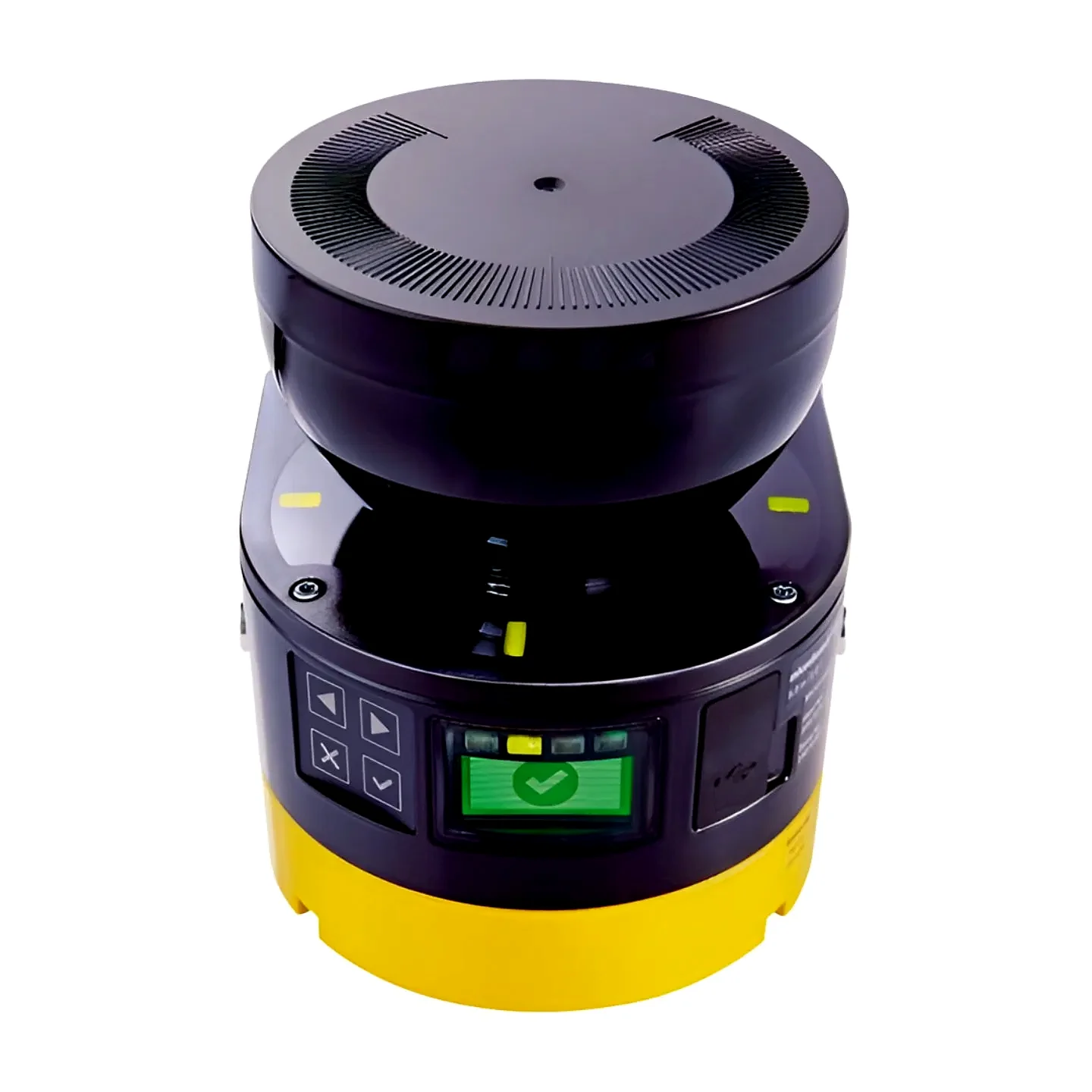
Presence sensing, loading apertures and configured fields engineered around stopping performance and reach routes.
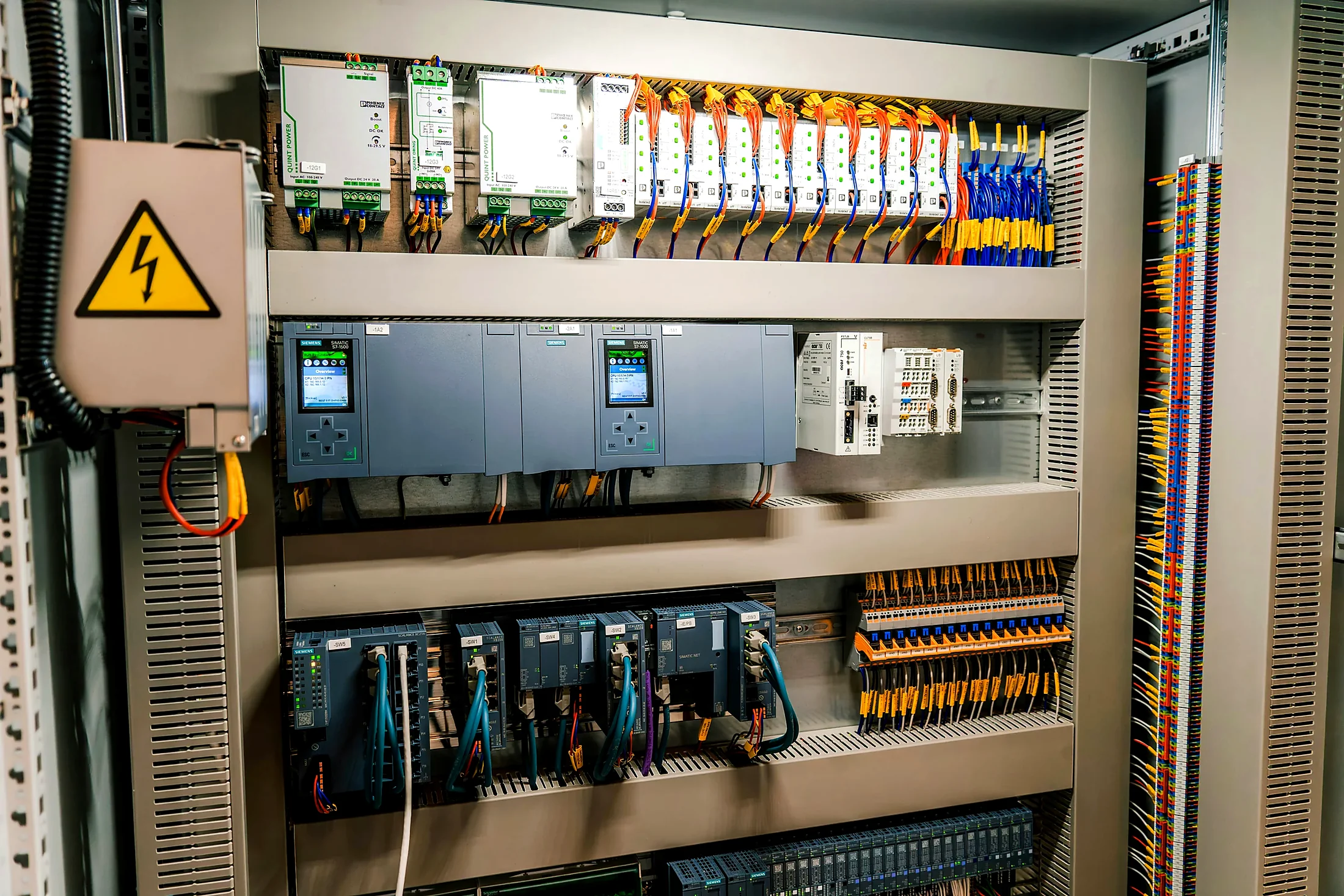
Safety relays or PLCs, emergency stops, reset positioning, status indication and controlled restart behaviour.
The correct solution protects people while supporting loading, setting, cleaning, fault recovery and maintenance.
We map routine and non-routine entry, whole-body access, visibility, escape and maintenance tasks before positioning gates or devices.
Robot motion, tooling, conveyors and process equipment can have different stopping behaviour. The safety function has to address the full cell.
Reset location, sight lines, presence sensing, trapped-key arrangements and deliberate start logic are considered as part of access control.
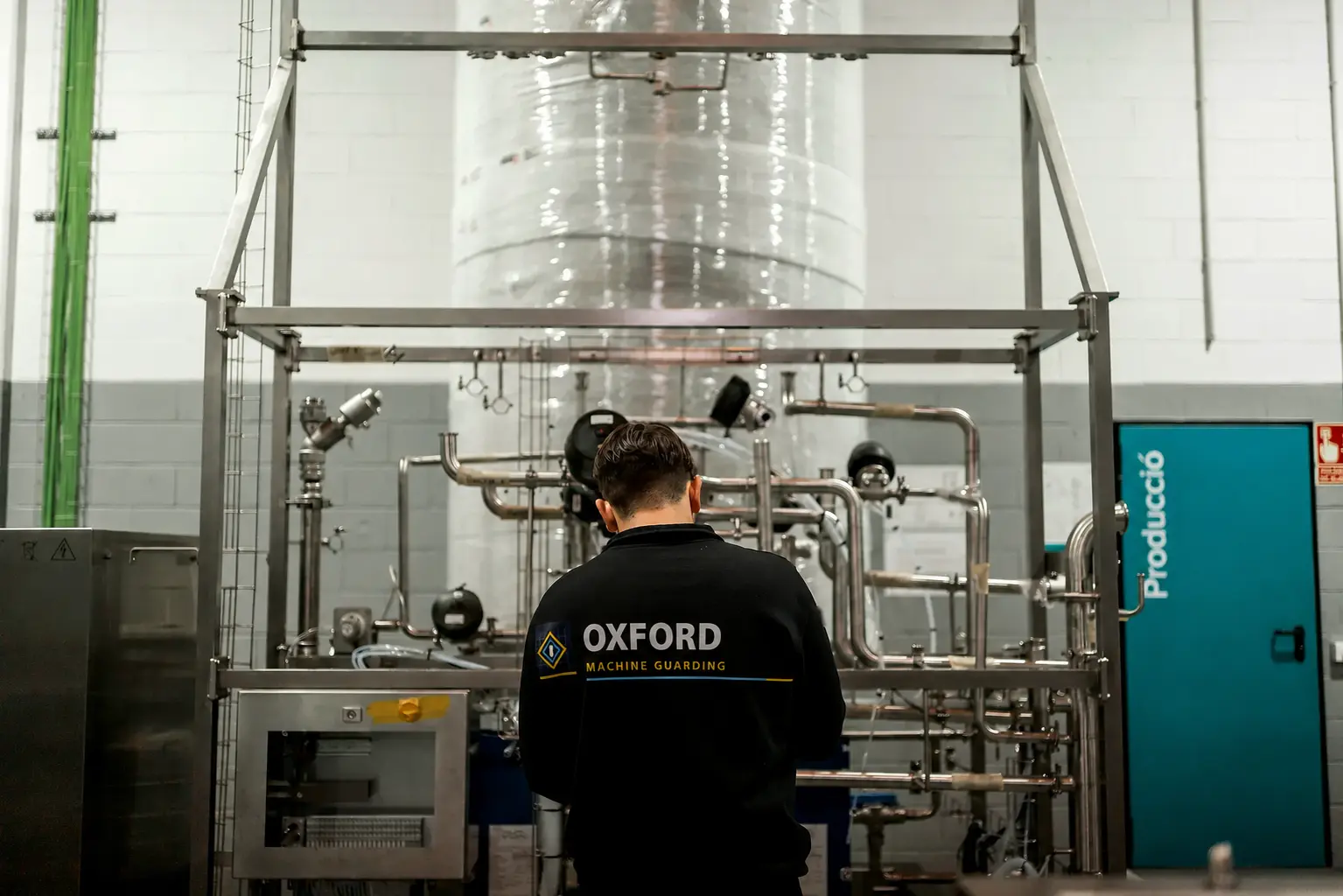
Representative image; garment branding digitally retouched.
Survey to handoverCapture layout, robot envelope, hazards, access routes, operating modes, stopping behaviour and site constraints.
Define boundaries, safe distances, gate logic, presence sensing, control interfaces and responsibility at every opening.
Produce the physical guarding and agreed safety-system scope with maintainability and installation planned in.
Commission the solution, record functional checks and provide the agreed project documentation.
Focused guidance for new cells, existing installations and application-specific guarding.
Define hazards, operating modes, access tasks, stopping behaviour and responsibility before design.
Plan a risk reviewImprove damaged, outdated or operationally unsuitable fencing, access and safety controls.
Review retrofit optionsProtect pallet transfer, conveyor interfaces, personnel access and vehicle routes.
Explore palletiser safetyCombine movement safeguarding with arc, spatter and process containment.
Explore welding cellsAssess tooling, payload, contact, separation, safe zones and any need for physical guarding.
Review cobot guardingPosition fencing, scanners and light curtains from reach, approach and stopping evidence.
Plan safeguard positioningCoordinate CNC or press interfaces, machine doors, recovery access and restart logic.
Explore machine tendingProtect conveyor openings, product transfers, changeovers and case-handling access.
Explore packaging robotsCell entry, pallet transfer and product-flow openings.
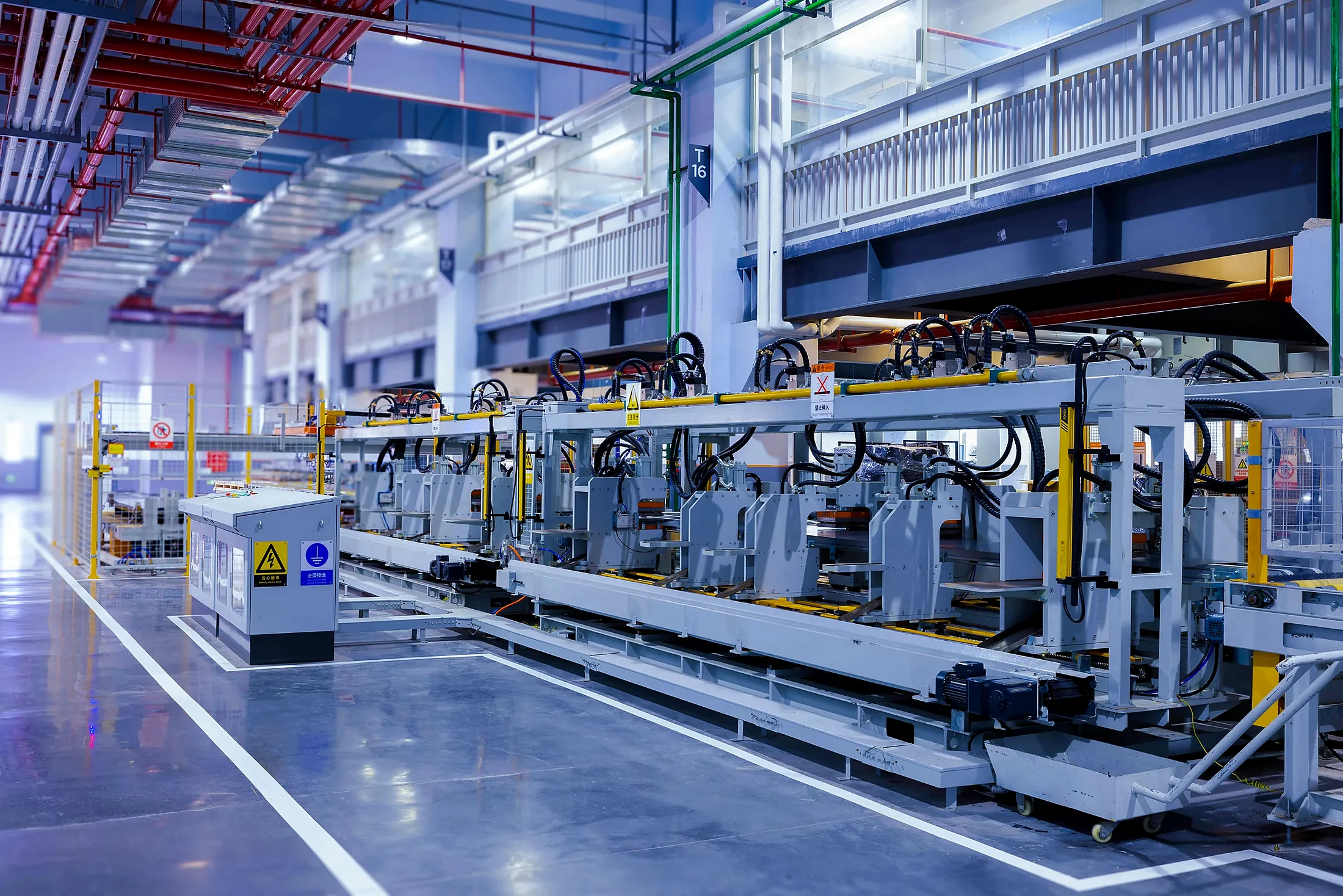
Robot, machine tool and operator access as one system.
Movement, process containment and controlled access.
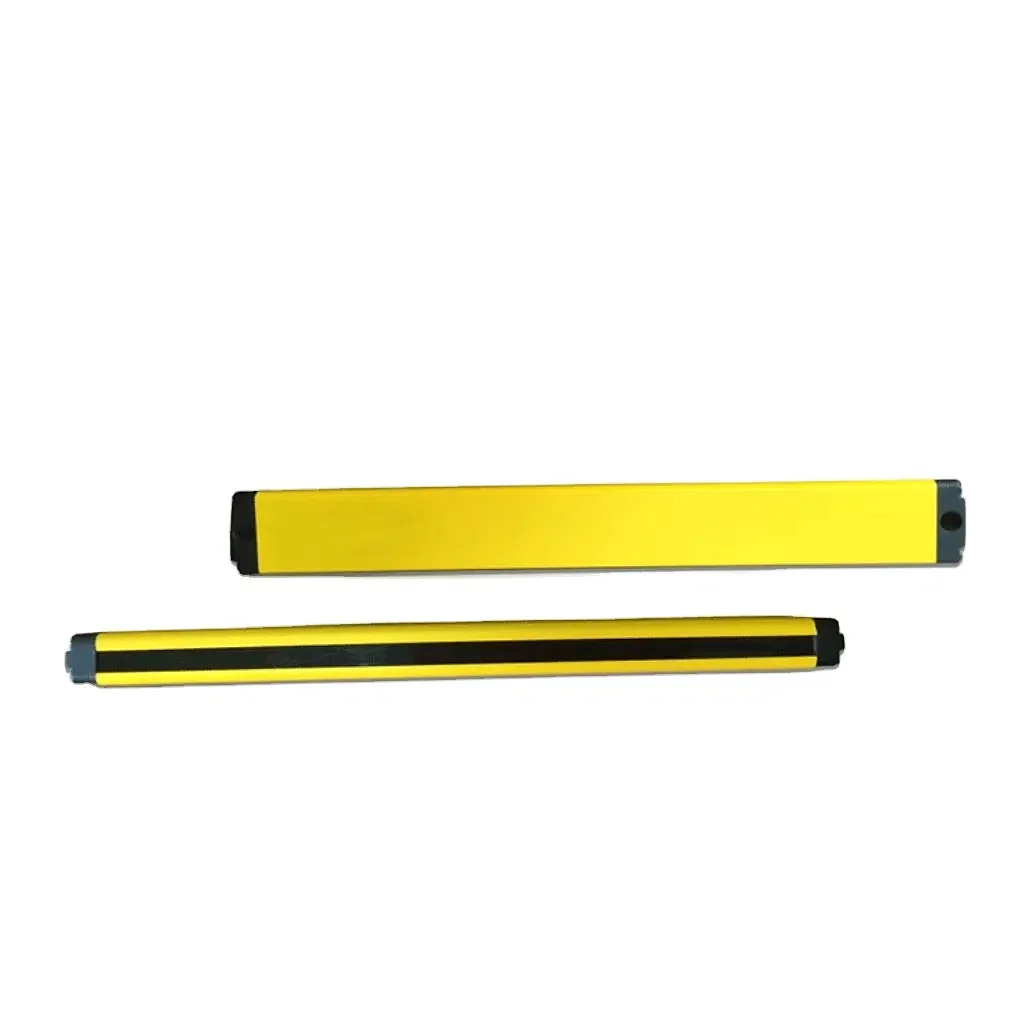
Protected loading points and frequent operator interaction.
Conveyor interfaces, muting and access for changeovers.
Application-specific collaborative safety and zone control.
Robot safeguarding normally draws on machinery risk assessment, robot integration, guard construction, interlocking, safety distance and control-system principles. The applicable requirements and responsible parties are confirmed for each project.
General guidance only. The machine-specific assessment controls the final design.
A robot cell can combine perimeter fencing, monitored or guard-locked access, presence sensing, emergency stops, safety-rated control functions and a deliberate reset arrangement. The final architecture depends on the risk assessment, stopping performance and access tasks.
No. The tool, payload, speed, force, workpiece and surrounding equipment may create hazards that require fencing or other protective measures even when a collaborative robot is used.
Guard locking can be appropriate where hazardous movement does not stop before a person could reach it, where process risk must be contained, or where controlled release is part of the access sequence.
Sometimes, but occlusion, floor condition, approach direction, contamination and whole-body presence must all be considered. Many cells use physical guarding and presence sensing together.
Overall photographs, a layout, robot and tooling details, the operating sequence, access tasks, stopping information, control details, site constraints and the required timescale are useful.
Send photographs, a layout or a short description. We will help define the right survey and engineering scope.
Map the robot, tooling, workpiece and all movements that can create a hazard. Include loading stations, maintenance access and recovery tasks, not just the programmed cycle. Define the required protective functions and their interfaces, then agree installation checks, validation and the controlled restart procedure for the complete cell.